
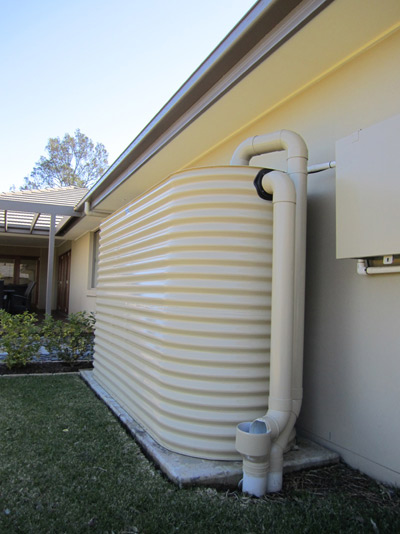
If you’re building a new home or planning a renovation in NSW, you’ve probably come across the term BASIX. It sounds official and a little intimidating, but it’s actually quite straightforward once you know what you’re looking at. Today we’ll cover what BASIX is, when a rainwater tank is required, how size is determined, and what makes a steel tank a smart choice for compliance.
What is BASIX?
BASIX stands for Building Sustainability Index. It’s a NSW Government initiative introduced in 2004 to reduce water and energy consumption in residential developments. If you’re building a new home, or undertaking renovations valued at $50,000 or more, you’ll need to submit a BASIX certificate as part of your development application.
The certificate is generated through an online assessment tool. You enter details about your project such as building materials, fixtures, and landscaping, and the tool calculates whether your design meets the required water and energy targets. A BASIX¹ certificate is a condition of development consent. You can’t skip it.
When is a rainwater tank required?
Rainwater tanks are one of the most common ways NSW homeowners meet their BASIX water target. In fact, for most new free-standing homes, a tank is practically standard. The BASIX tool requires a 40% reduction in potable water use below the NSW benchmark, and a rainwater tank connected to toilets, laundry, or garden irrigation is one of the simplest ways to get there.
If a rainwater tank is nominated on your BASIX certificate, it’s not optional. It must be installed as specified, and your certifier will check.
How is the required tank size determined?
There’s no single fixed size. The BASIX tool calculates the minimum tank capacity based on a range of site-specific factors including the type of dwelling, your location and climate zone, the available roof catchment area, and the number of fixtures the tank will supply.
For most suburban homes, the minimum capacity starts at around 2,000 litres, though it can be significantly larger depending on your design. The good news is you can always go bigger. If your BASIX certificate states a minimum of 5,000 litres and you install 10,000, you’re simply over-complying, which is fine.
One thing to note: if your council also requires a separate fire fighting tank, that volume sits outside of BASIX. The two requirements are calculated independently.
Steel tanks and bushfire zones
If your property is in a bushfire-prone area, your tank choice is narrowed significantly. BASIX and NSW RFS guidelines both specify that tanks in bushfire-prone areas must be made from non-combustible materials such as steel or concrete. A poly tank won’t cut it.
gmTANKS manufactures corrugated steel rainwater and fire tanks from Bluescope Aquaplate steel, which is the go-to material for exactly this situation. Our tanks are backed by a 10-year manufacturer’s warranty and Bluescope’s 20-year Aquaplate material warranty, and they’re available in the full range of Colorbond colours to suit your home’s exterior.
What to do next
If you’re at the planning stage, the simplest starting point is to run your project through the BASIX assessment tool at basix.nsw.gov.au, or ask your builder or certifier to do it for you. Once you know the minimum tank size and the shape that suits your site, we can manufacture to those exact specifications.
Because we make every tank to order, you’re not locked into standard sizes. Slimline, round, square, small suburban block or large rural property, we’ll build it to fit.
Get in touch with the gmTANKS team for a no-obligation quote.